Share with your friends!
Beef tartare looks like the kind of thing you should only order in a restaurant, but it actually works surprisingly well at home if you keep the process clean and controlled. This version sticks to the classic bistro flavor profile—tender beef, sharp shallot, briny capers—but leans on a few modern tweaks to keep it lighter, safer, and more customizable.
I started making this when I wanted something that felt like a special-occasion dish without needing a long cooking process or a pile of heavy sides. Using a small amount of high-quality beef and building flavor around it with mayonnaise, capers, herbs, and a touch of Dijon gives you a satisfying plate that doesn’t feel overly rich. You’re basically assembling and seasoning, not cooking, so the details matter a lot.
What makes this beef tartare feel more modern is the flexibility: you can control how creamy, tangy, or lean it is, skip the egg yolk if you prefer, or adjust the fish sauce for extra umami without making the dish salty or intense. I’ll walk you through choosing the right cut, handling it safely, and dialing in the seasoning so the result is clean, bright, and balanced. If you’ve been curious about making beef tartare at home, this version keeps everything straightforward and precise.
The Magic of Beef Tartare
Click here to get printable version
Prep Time: 20 minutes
Total Time: 20 minutes
Servings: 4
What You’ll Need
- 4 ounces (113 g) beef tenderloin
- 2 tablespoons (30 g) homemade mayonnaise
- Kosher salt, to taste
- Freshly ground black pepper, to taste
- Extra-virgin olive oil, as needed
- Red or white wine vinegar, as needed
- Dijon mustard, to taste
- 3 drops fish sauce (optional)
- 1 tablespoon plus 1 teaspoon very finely minced shallot (from 1 shallot)
- 1 teaspoon finely minced chives
- 1 teaspoon finely minced flat-leaf parsley leaves and tender stems
- 1 teaspoon finely minced cornichons
- 2 teaspoons drained capers
- 1 large egg yolk (optional)
- Toasts, for serving (whole grain or sourdough work well)
Start Here
- Chill and trim the beef. Start with very cold beef tenderloin; a short rest in the freezer (about 10–15 minutes) makes it easier to cut cleanly. On a very clean cutting board with a sharp knife, trim away any silver skin or large pieces of fat so you’re left with lean meat.
- Slice, then mince. Cut the beef into thin slices no thicker than 1/4 inch. Stack a few slices and slice them again into narrow 1/4- or 1/8-inch strips. Turn the strips and cut across them into a fine dice. The pieces should be small and even, not a paste. Transfer the minced beef to a mixing bowl and keep it chilled while you work.
- Build the creamy base. Add the homemade mayonnaise to the bowl with the beef. Season with a pinch of kosher salt and a few grinds of black pepper. Stir gently but thoroughly until every piece of beef is lightly coated. At this stage, the mixture should look glossy, not soupy or dry.
- Adjust with oil, vinegar, and mustard. Taste a small amount. If it feels too rich or heavy, stir in a few drops of wine vinegar for brightness. If it seems a bit flat, add a tiny squeeze of Dijon mustard and a drizzle of extra-virgin olive oil. Work in very small increments, tasting as you go so you don’t overwhelm the beef. If using fish sauce, add the 3 drops now and mix well.
- Add aromatic ingredients. Stir in the finely minced shallot, chives, parsley, cornichons, and capers. Fold them through until they’re evenly distributed. The tartare should look speckled with herbs and pickled elements, with no big clumps of any one ingredient.
- Taste and fine-tune. Taste again and adjust salt, pepper, acidity (vinegar), and richness (olive oil or a touch more mayonnaise) as needed. You’re aiming for a balanced bite: bright, savory, and clean, with the beef still clearly in focus.
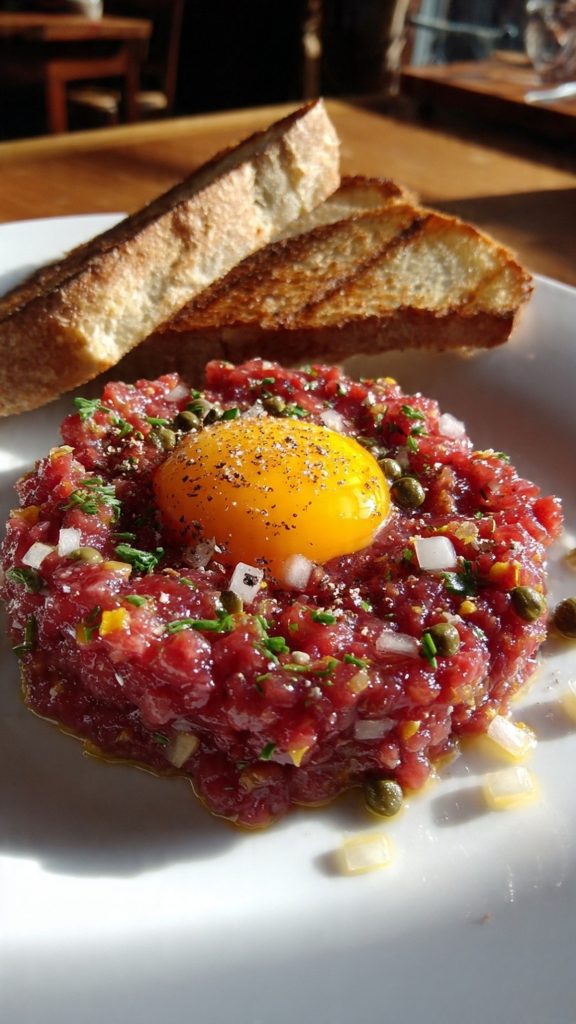
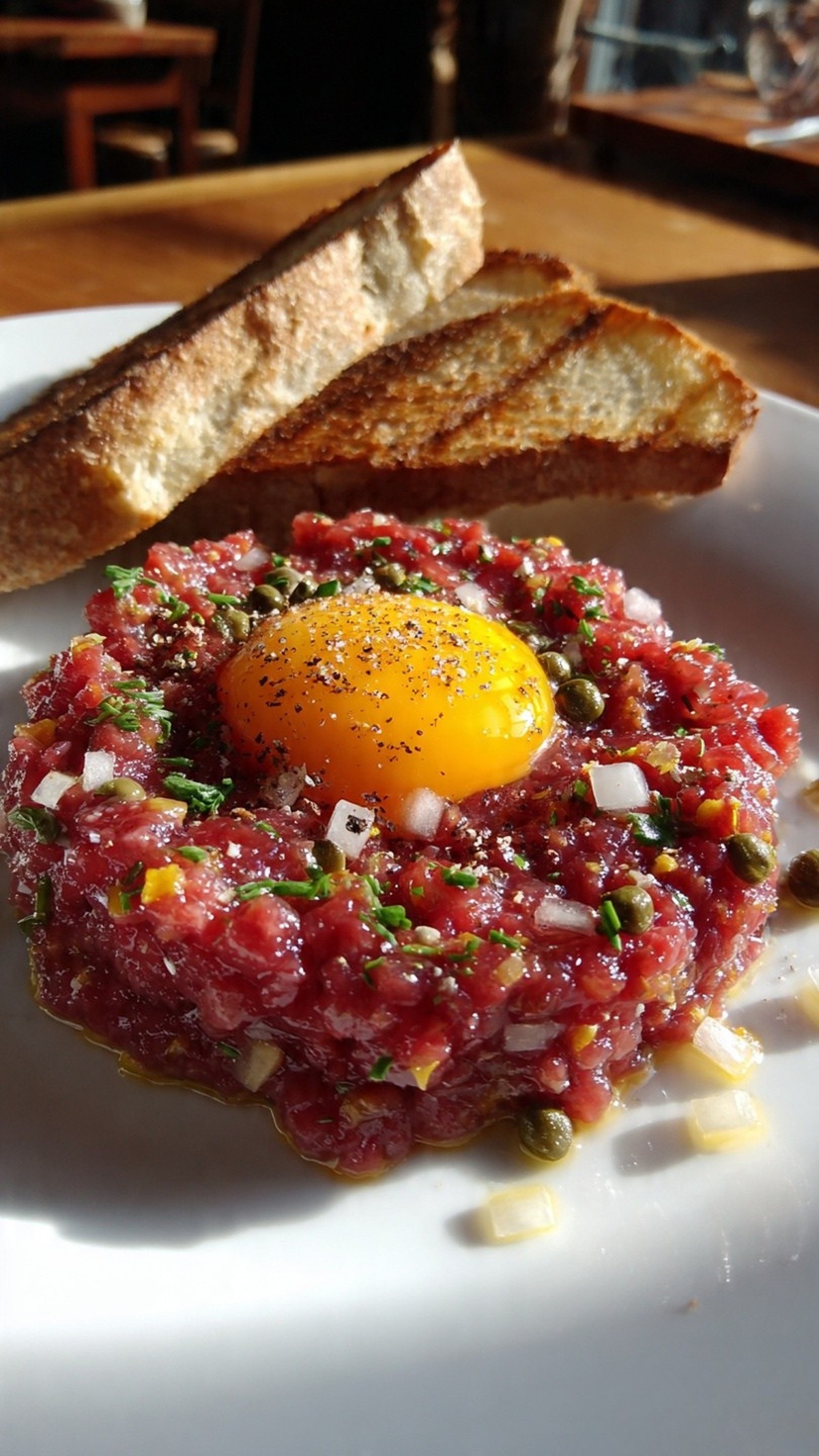
- Shape and serve. Mound the steak tartare onto a chilled plate. For a more defined presentation, pack it gently into a ring mold and lift the ring straight up. If you’re using the egg yolk, create a shallow indentation in the center and place the yolk on top. Serve immediately with toasts and extra cornichons on the side. Don’t let the tartare sit at room temperature; assemble just before serving.
Safest Beef Cuts to Use
For beef tartare, the cut you choose directly affects both safety and texture. The classic choice is beef tenderloin: it’s lean, very tender, and easy to trim of connective tissue, which gives you a clean, soft bite. You can also use top sirloin, eye of round, or center-cut strip loin if you’re comfortable trimming and dicing them very finely. Whichever cut you pick, prioritize freshness and quality: buy from a trusted butcher, ask for a whole piece (not pre-ground), and use it the same day whenever possible. At home, keep all surfaces, knives, and boards extremely clean, and keep the meat cold from purchase to plating. Avoid previously frozen, mechanically tenderized, or pre-marinated cuts, since they often have more surface handling and less predictable texture.
Adjusting Acidity and Richness
Fine-tuning acidity and richness is what makes this beef tartare feel light instead of heavy. The main sources of richness are the beef, mayonnaise, olive oil, and egg yolk. The balancing elements are wine vinegar, Dijon mustard, cornichons, and capers. If the tartare tastes dull or fatty, add acidity in drops, not spoonfuls—a few drops of vinegar or a small extra amount of capers can wake everything up quickly. If it’s too sharp or tangy, pull back on the vinegar next time and soften it with a drizzle of olive oil or a bit more mayonnaise. For a lighter, healthier profile, you can reduce or omit the egg yolk and rely on a thinner layer of mayo, then lean harder on herbs and pickled elements for flavor instead of fat. The goal is a bite that finishes cleanly, not one that coats your palate.
Frequently Asked Questions (FAQ)
Can I prepare beef tartare in advance for guests?
For both safety and texture, beef tartare is best assembled as close to serving time as possible. You can, however, prep components in advance to make things smoother. Up to a few hours ahead, you can mince the shallots, herbs, cornichons, and capers, then store them covered in the refrigerator. You can also mix your mayonnaise and measure out vinegar, mustard, and fish sauce. Wait to cut the beef and combine everything until 15–20 minutes before serving, and keep it well chilled until it hits the table.
How can I make this recipe feel lighter without losing flavor?
There are a few easy ways to keep beef tartare feeling lighter while preserving flavor. First, slightly reduce the mayonnaise and skip the egg yolk, then compensate with more fresh herbs and a bit of extra shallot and capers. You can also choose whole grain or thinly sliced sourdough toasts instead of richer brioche. If the tartare still feels heavy, add a few extra drops of vinegar or a touch more Dijon to brighten it. Serving the tartare alongside a simple salad of lightly dressed greens also helps balance the overall meal.
What if I don’t like the taste of raw shallots in tartare?
If raw shallots feel too sharp, you don’t have to skip them entirely; you can soften their flavor. Finely mince the shallot, then briefly rinse it under cold water and pat it dry before adding. This removes some of the harsher compounds. Another option is to let the minced shallot sit for 5–10 minutes with a drop of vinegar and a pinch of salt, which gently “cures” it. Taste before mixing so you know how strong it is, and adjust the quantity to your preference.
How do I know if I’ve overworked or under-seasoned the tartare?
Overworked tartare will look compacted and slightly pasty, rather than loose and defined. To avoid this, stir gently and stop as soon as everything looks evenly coated. Under-seasoned tartare often tastes flat or one-dimensional, even if the beef quality is good. Taste a small spoonful on toast; if it doesn’t pop, add a bit of salt first, then adjust acidity or mustard in very small steps. It should taste balanced on its own, without needing extra seasoning at the table.
Beef Tartare
Equipment
- Sharp knife
- mixing bowl
- Ring mold (optional)
Ingredients
- 4 ounces (113g) beef tenderloin
- 2 tablespoons (30g) homemade mayonnaise
- kosher salt
- freshly ground black pepper
- as needed extra-virgin olive oil
- as needed red or white wine vinegar
- Dijon mustard
- 3 drops fish sauce optional
- 1 tablespoon plus 1 teaspoon very finely minced shallot (from 1 shallot)
- 1 teaspoon finely minced chives
- 1 teaspoon finely minced flat-leaf parsley leaves and tender stems
- 1 teaspoon finely minced cornichons
- 2 teaspoons capers drained
- 1 large egg yolk optional
- toasts for serving
Instructions
- Work on a thoroughly cleaned cutting board with a very sharp knife. Trim the beef if needed, slice it into thin pieces about 1/4 inch thick, cut those into thin strips, then finely mince the strips to your preferred texture. Transfer the minced beef to a mixing bowl.
- Add the mayonnaise to the bowl and season lightly with kosher salt and freshly ground black pepper. Stir to combine, then taste and gradually adjust the seasoning and flavor with tiny additions of olive oil, wine vinegar, or a touch of Dijon mustard until the balance suits you. If you like a deeper savory note, incorporate the fish sauce sparingly.
- Fold in the minced shallot, chives, parsley, cornichons, and drained capers until everything is evenly distributed throughout the beef mixture.
- Spoon or press the tartare onto a serving plate—use a ring mold for a neat presentation if desired. Nestle the egg yolk on top when using, and serve immediately with toasts and extra cornichons on the side.