
Share with your friends!
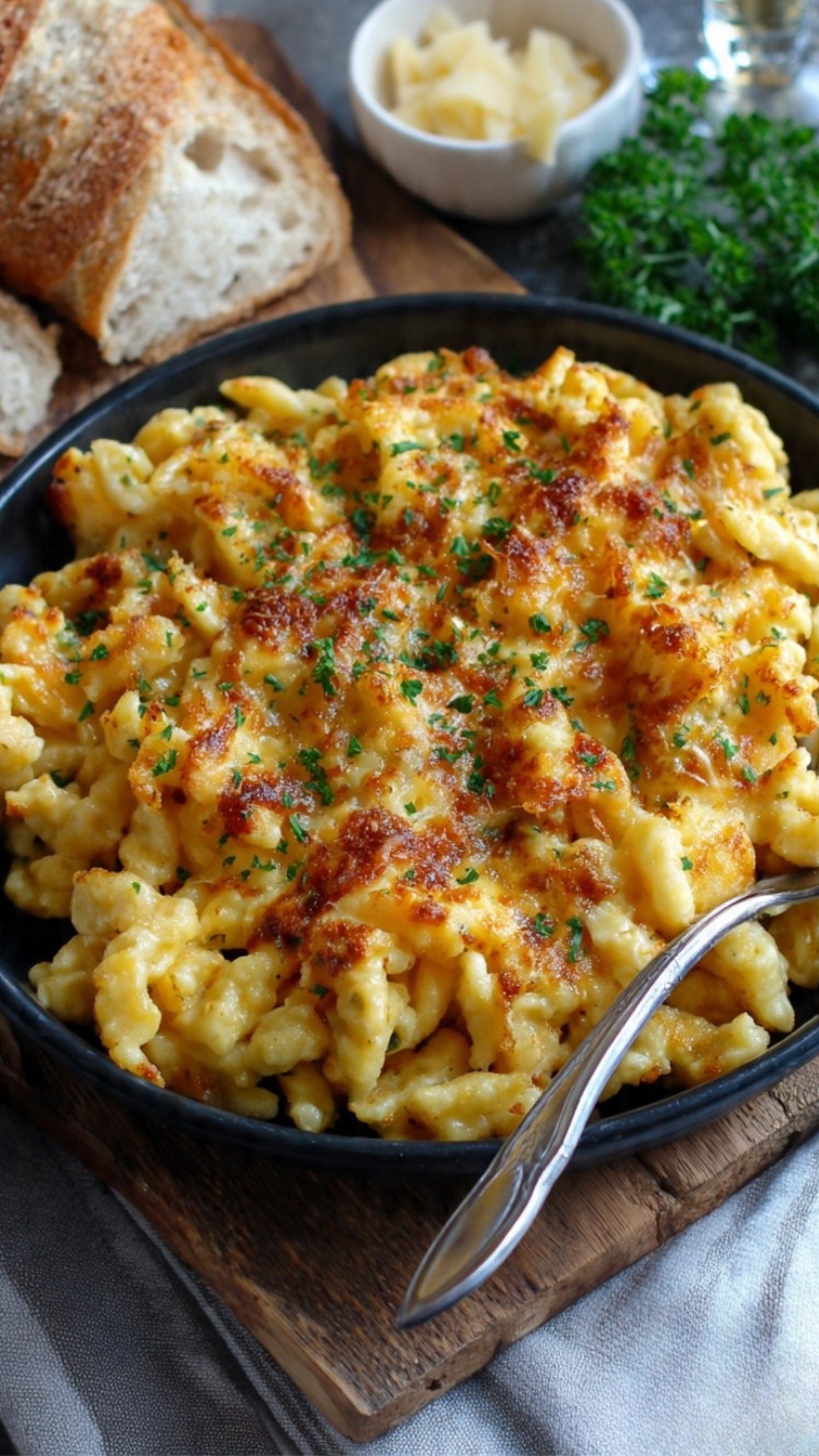
Whenever I make German Cheese Spaetzle from scratch, it feels very hands-on in the best way. You start with simple things—cheese, spaetzle, butter—and by the time you’re done, the kitchen smells toasty and savory, and there’s a bubbling pan on the table that everyone immediately leans toward. It’s the kind of dish that makes people pause their conversation for a moment when it hits the center of the table.
I like this recipe for entertaining because it’s straightforward, but it still feels a bit special. You can cook the spaetzle ahead of time, grate the Emmental, and chop the chives earlier in the day. When guests arrive, you’re mostly just crisping, melting, and broiling. That means more time to actually sit and talk, and less time hovering over the stove.
German Cheese Spaetzle is also easier to adjust than it looks. You can lighten things up with a few simple swaps, like using half-and-half instead of heavy cream or adding extra chives and a side salad to balance the richness. Serve it in the same cast iron skillet you broiled it in, and it turns into an easy, shareable main or side dish everyone can scoop right from the pan. If you enjoy the idea of building flavor in layers—crispy edges, creamy cheese, and a bit of bite from the onions—this is one worth trying.
Elegant Simplicity: German Cheese Spaetzle (Käsespätzle)
Click here to get printable version
Your Ingredient Checklist
- 4–5 cups cooked Spaetzle (homemade or store-bought)
- 1.5 cups shredded Emmental cheese (about 6 oz)
- 1/4 cup heavy cream (or lighter substitutes; see tips below)
- 2 Tbsp chopped fresh chives (plus more for garnish)
- 2 Tbsp unsalted butter
- Crispy fried onions, for topping
Technique-Focused Instructions
- In a medium bowl, mix the shredded Emmental, heavy cream, and chopped chives. Stir until everything is evenly coated. The mixture should look like thick, creamy cheese shreds rather than a smooth sauce. Set aside.
- Place a 9- or 10-inch cast iron skillet over medium heat and add the butter. Let it melt completely and start to foam lightly. Don’t let it brown yet; you just want it hot and glossy.
- Add the cooked spaetzle to the hot butter. Spread it into an even layer and increase the heat to medium-high. Cook, stirring every minute or so, until the spaetzle develops golden-brown, slightly crispy edges, about 5–7 minutes. Stop when you see clear browning on many of the noodles but before they dry out.
- Reduce the heat to medium-low. Pour the cheese-cream mixture over the spaetzle and stir gently to combine. Keep cooking for 2–3 minutes, until the cheese is fully melted and the spaetzle is evenly coated in a creamy sauce. If it looks too thick, add a tablespoon of cream or milk to loosen it slightly.
- Turn off the stovetop. Smooth the top of the spaetzle mixture in the skillet so it’s relatively even—this helps it brown uniformly under the broiler.
- Place the skillet under your oven’s broiler for 1–2 minutes, watching very closely. As soon as the top turns golden and you see a few deeper brown spots, pull it out to avoid burning.
- Carefully remove the hot skillet from the oven. Garnish with extra chopped chives and a generous handful of crispy fried onions. Serve straight from the pan so everyone can scoop their portion at the table. For entertaining, bring the skillet to the table on a trivet and add small plates or bowls alongside.
Best Cheese Options
Emmental is the classic choice for German Cheese Spaetzle because it melts smoothly and has a mild, nutty flavor that doesn’t overpower the dish. If you can’t find Emmental, you can use Swiss, Jarlsberg, or a young Gruyère. For a slightly stronger flavor, mix Emmental with a bit of Gruyère or aged cheddar. Aim for cheeses that melt well and don’t get greasy—avoid pre-shredded blends with anti-caking agents if possible, since they can lead to a grainy texture. For a lighter version, try using part-skim mozzarella mixed with a smaller amount of Emmental or Swiss so you keep good melt and still get that classic taste. Grating the cheese yourself makes a noticeable difference in both texture and flavor when serving guests.
Homemade vs Store-Bought Spaetzle
Both homemade and store-bought spaetzle work for this recipe; the best choice depends on your time and energy. Homemade spaetzle usually has a slightly chewier texture and a fresher egg flavor. If you’re cooking for a small group and enjoy the process, making your own can be a satisfying project. Just be sure to cook and cool the noodles ahead of time so they crisp nicely in the skillet. Store-bought spaetzle is a solid option when you’re hosting and juggling multiple dishes. Rinse and drain packaged spaetzle well, then pat dry so it doesn’t steam instead of crisp when it hits the butter. If you’re cooking for a larger crowd, store-bought also helps keep the prep predictable, and most guests won’t notice the difference once everything is coated in cheese and finished under the broiler.
Getting Crispy Edges
Those browned, slightly crunchy bits are what make this dish stand out when you’re serving it family-style. To get them, start with spaetzle that’s not too wet—if it was just boiled, spread it on a tray to steam dry for a few minutes. Heat the butter until it’s hot but not smoking, then add the spaetzle in an even layer. Avoid constant stirring; instead, let it sit for a minute or two between turns so the noodles can brown on the bottom. Cast iron works especially well because it holds heat, but a heavy stainless-steel pan is also fine. For a lighter version, you can reduce the butter to 1 tablespoon and add a small splash of neutral oil to help with browning while slightly cutting saturated fat. Just remember: dry noodles + hot pan + brief undisturbed cooking equals better crisp.
Broiling Without Burning
The broiler step is quick but powerful, and it’s where a lot of the visual appeal comes from. First, make sure your oven rack is in the upper-middle position rather than directly under the broiler; this gives you a little buffer. Preheat the broiler for a couple of minutes so you get even heat. Once the skillet goes in, don’t walk away—spaetzle can go from perfectly golden to too dark in less than 30 seconds. Aim for 1–2 minutes, checking through the oven door. If your broiler runs very hot, crack the door slightly and watch closely. For healthier tweaks, you can use a bit less cheese and spread it more evenly on top so that a thinner layer still browns nicely, giving you that indulgent look and taste without overloading the dish.
Easy Add-Ins and Swaps
This German Cheese Spaetzle recipe is flexible, which makes it great for entertaining different preferences. For more protein, stir in sautéed mushrooms, peas, or shredded cooked chicken right before you add the cheese mixture. To lighten the dish, swap the heavy cream for half-and-half, evaporated milk, or even unsweetened cashew cream. If using a lighter liquid, warm it slightly before mixing with the cheese to encourage smooth melting. You can also add finely chopped spinach or kale to the pan with the spaetzle for extra greens. For guests avoiding onions, skip the crispy fried onions and finish with toasted breadcrumbs for crunch. Gluten-free spaetzle or small gluten-free pasta shapes can work as a substitute if cooked just to al dente. With a few small changes, you can keep the spirit of classic Käsespätzle while adjusting it to your table.
German Cheese Spaetzle (Käsespätzle)
Equipment
- 9 or 10-inch cast iron skillet
Ingredients
- 1.5 cups shredded Emmental cheese about 6 oz
- 1/4 cup heavy cream
- 2 Tbsp chives chopped (plus more for garnish)
- 2 Tbsp unsalted butter
- 4-5 cups spaetzle
- crispy fried onions for garnish
Instructions
- Whisk together the shredded Emmental, heavy cream, and chopped chives in a bowl until evenly combined.
- Melt the butter in a 9- or 10-inch cast-iron skillet over medium heat until it begins to shimmer.
- Add the spaetzle to the hot skillet and cook over medium-high heat, stirring occasionally, until pieces develop golden edges and a bit of crispness, about 5–8 minutes.
- Pour the cheese and cream mixture over the spaetzle and stir until the cheese has melted and the noodles are thoroughly coated.
- Place the skillet under a preheated broiler for 1–2 minutes until the top turns golden and bubbly—watch closely to avoid burning.
- Remove from the oven, sprinkle with additional chopped chives and crispy fried onions, and serve immediately.