Share with your friends!
Garlic focaccia is one of those recipes that looks “special,” but it’s really just good ingredients doing the heavy lifting. Around this time of year, when it’s chilly and everyone’s hungry all the time, I lean hard on bread that basically makes the whole house smell like dinner before I’ve even figured out the main dish. And in this recipe, garlic isn’t just a background flavor — it’s the whole point.
We treat the garlic right here: low heat, plenty of extra-virgin olive oil, and enough time to gently pull out that mellow, savory flavor without burning it. That garlic oil is what makes this focaccia taste like something you’d buy from a bakery, not something you threw together between homework and bedtime. No mixer, no fussy kneading, and the dough is very forgiving — perfect if you’re still getting comfortable with yeast.
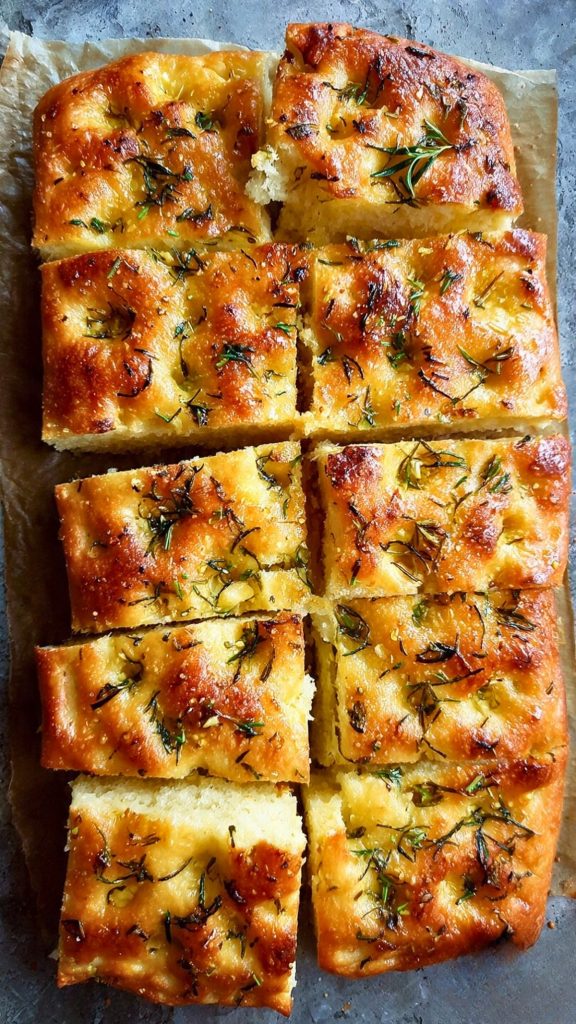
This garlic focaccia fits into real life: it works with soup, pasta, roast chicken, or honestly just a plate and some salt. It’s great for game days, fall and winter gatherings, or those nights when you want the oven on anyway. If you can stir with a spoon and remember to set a timer, you can make this. The dough is soft, the crust is crisp around the edges, and the garlic and herbs do all the talking.
Cozy Up with Homemade Garlic Focaccia
Click here to get printable version
Your Ingredient Checklist
- 1/2 cup extra-virgin olive oil (120 ml)
- 2 garlic cloves, finely minced
- 1 tablespoon chopped fresh rosemary or 1 teaspoon dried
- 1 tablespoon chopped fresh thyme or 1 teaspoon dried
- 1/4 teaspoon freshly ground black pepper
- 1 cup lukewarm water, 110°F to 115°F (235 ml)
- 2 1/4 teaspoons instant yeast (one 1/4-ounce packet)
- 1/4 teaspoon sugar, honey, or maple syrup
- 2 1/2 cups all-purpose flour (325 g)
- 1 teaspoon fine sea salt
Prep & Assemble
- Infuse the garlic oil. Add the olive oil, minced garlic, rosemary, thyme, and black pepper to a cold medium skillet. Set it over low heat and cook gently for 5 to 10 minutes, stirring now and then, until it smells very fragrant. Do not let the garlic brown — you’re just warming it. As soon as it looks a bit softened and smells strong, pull it off the heat and let it cool slightly.
- Activate the yeast. In a large mixing bowl, stir together the warm water, yeast, and sugar (or honey/maple syrup). Give it a quick mix and let it sit for about 5 minutes. The surface should start to look foamy or creamy — that’s your sign the yeast is awake.
- Start the dough. Add 1 cup of the flour and 1/4 cup of the cooled garlic-infused oil to the yeast mixture. Stir just 3 to 4 times, until the flour is mostly moistened. The mixture will look shaggy and lumpy. Let it rest for another 5 minutes so the flour hydrates.
- Bring the dough together. Add the remaining 1 1/2 cups flour and the salt. Stir until a rough dough forms and most of the flour is incorporated. Turn it out onto a lightly floured surface and knead 10 to 15 times — this is quick, about a minute — until the dough feels smoother and more elastic. It doesn’t need to be perfect; it should feel soft and slightly tacky, not sticky.
- First rise. Lightly oil a large bowl (you can use a little of the garlic oil or plain oil). Place the dough in the bowl, turning once so it’s lightly coated. Cover with a warm, damp towel or plastic wrap and let it rise at room temperature until doubled in size, about 1 to 2 hours, depending on how warm your kitchen is. The dough should look puffed and airy.
- Preheat the oven. Once the dough is close to doubled, set your oven to 450°F (232°C) so it has time to fully preheat.
- Prepare the pan. Spoon about 2 tablespoons of the remaining garlic-infused oil into a 9×13-inch rimmed baking sheet and spread it around the bottom and corners. Make sure the whole surface is coated; this helps prevent sticking and gives that crispy, golden bottom.
- Shape and proof in the pan. Gently transfer the risen dough to the oiled pan. Use your fingers and palms to press and stretch it toward the edges. If it springs back, let it rest for 5 minutes, then try again. Once it mostly fills the pan, use your fingertips to press deep dimples all over the surface. Drizzle the remaining garlic oil over the top, letting it pool slightly in the dimples. Let the dough rest and puff for another 20 to 30 minutes; it should look a bit lighter and airy.
- Bake. Slide the pan into the hot oven and bake for 15 to 20 minutes, until the focaccia is golden brown on top and the edges look crisp. If your oven runs hot, start checking around 13–14 minutes. The center should feel set when gently pressed.
- Cool and serve. Transfer the pan to a wire rack and let the focaccia cool in the pan until it’s just warm or at room temperature. This helps the crumb set so it slices cleanly. Cut into 16 pieces and serve, or cool completely before storing.
Choosing the Right Olive Oil
Olive oil is doing a lot of the heavy lifting in this garlic focaccia, so it’s worth choosing one you actually like the taste of. You don’t need the most expensive bottle on the shelf, but avoid anything that tastes harsh or flat when you dip bread into it. A mid-range, fruity extra-virgin olive oil works well here. Since you’re using 1/2 cup of oil between the dough, pan, and topping, its flavor really shows up in every bite. If you’re unsure, smell the oil first — it should smell fresh and pleasant, not musty or like crayons. For beginners, I’d say pick a reliable supermarket brand labeled “extra-virgin” and “first cold pressed,” then stick with it if you like the final result.
Fresh vs Dried Herbs
Both fresh and dried herbs work in this focaccia, so use what you have and don’t overthink it. Fresh rosemary and thyme give a brighter, more noticeable pop of flavor and look nice on top. Dried herbs are stronger, so you use less, but they blend into the dough more. If you’re using dried herbs, rub them between your fingers before adding — this helps wake up their flavor. If you want to keep it very kid-friendly, go lighter on the herbs the first time and adjust next time. You can also mix and match: fresh rosemary with dried thyme, or skip one entirely if it’s not your favorite.
Overnight Proofing Option
If your day is packed, you can easily stretch this recipe over two days. After you mix and briefly knead the dough, place it in the oiled bowl, cover tightly, and put it in the fridge for up to 24 hours. It will rise slowly and develop more flavor. When you’re ready to bake, pull the dough out and let it warm up for 45 to 60 minutes, until it looks puffed again. Then press it into the pan, dimple, and do the final 20 to 30 minute rise before baking. This is a great option if you want fresh garlic focaccia for a busy weeknight dinner without starting from scratch at 3 p.m.
Pan Sizes and Thickness
A 9×13-inch rimmed baking sheet gives you a classic focaccia: not too thick, not too thin, with a good balance of chewy center and crispy edges. If you prefer thicker, more bread-like slices, use a slightly smaller pan (like a 9×9-inch square) and bake a few extra minutes, watching the top color. For thinner, crisper focaccia, you can stretch the dough onto a larger sheet pan and bake for a shorter time. No matter the pan, keep an eye on the color and check early, since thinner dough browns faster. Also, don’t skip oiling the pan generously — that’s what gives you that golden, almost fried bottom that makes focaccia so satisfying.
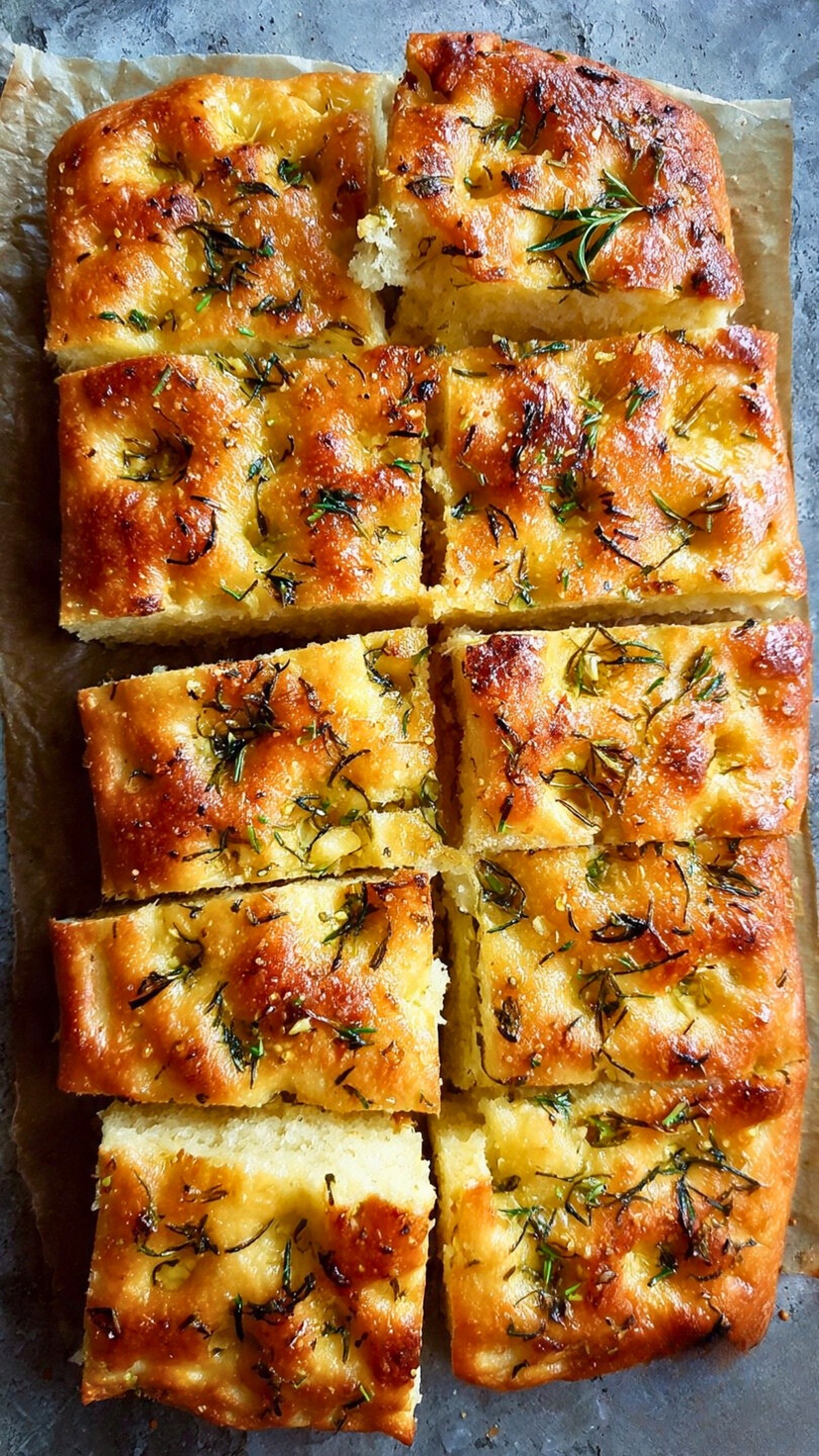
Garlic Focaccia
Equipment
- medium skillet
- Large Bowl
- 9x13-inch rimmed baking sheet
- Wire rack
Ingredients
Garlic-Infused Oil:
- 1/2 cup extra-virgin olive oil about 120 ml; divided (some for infusing, ~2 Tbsp to oil the pan, remainder for drizzling)
- 2 cloves garlic finely minced
- 1 tablespoon chopped fresh rosemary or 1 teaspoon dried
- 1 tablespoon chopped fresh thyme or 1 teaspoon dried
- 1/4 teaspoon fresh ground black pepper
Dough:
- 1 cup lukewarm water 110–115°F (about 235 ml)
- 2 1/4 teaspoons instant yeast one 1/4-ounce packet
- 1/4 teaspoon sugar, honey, or maple syrup
- 2 1/2 cups all-purpose flour about 325 g
- 1 teaspoon fine sea salt
Instructions
- Gather all ingredients and equipment: skillet, large bowl, rimmed baking sheet, and a wire rack.
Make the Dough:
- Place the olive oil, minced garlic, chopped rosemary, chopped thyme, and black pepper in a cold medium skillet. Warm gently over low heat, stirring occasionally, for 5–10 minutes until fragrant but not browned. Remove from heat and cool before using.
- In a large bowl, combine the lukewarm water, instant yeast, and the sugar or other sweetener. Stir a few times and let the mixture rest for about 5 minutes to activate the yeast.
- Add 1 cup of the flour and about 1/4 cup of the cooled garlic-infused oil to the yeast mixture. Mix 3–4 times until the flour is moistened, then let the mixture sit for another 5 minutes.
- Stir in the remaining 1 1/2 cups of flour and the sea salt. When a cohesive dough forms, turn it out onto a lightly floured surface and knead 10–15 times until the dough is smooth and elastic.
- Place the dough in a large bowl brushed with oil, cover with a warm, damp towel, and let it rise at room temperature until doubled in size, about 1 to 2 hours. (Alternatively, refrigerate overnight for a slower proof.)
Bake:
- Once the dough has doubled, preheat the oven to 450°F (232°C). Lightly oil a 9×13-inch rimmed baking sheet with roughly 2 tablespoons of the infused oil.
- Transfer the risen dough to the prepared pan and gently press it to fit. Use your fingertips to create dimples across the surface and drizzle with the remaining garlic-infused oil.
- Allow the dough to rest and puff for 20–30 minutes, then bake until the top is golden brown, about 15–20 minutes.
- Remove the focaccia from the oven and cool completely on a wire rack before slicing.