Share with your friends!
Fried calamari is my go-to “panic appetizer” when people drop by and I don’t want to blow the budget on takeout. Frozen calamari is usually affordable, keeps well, and cooks in minutes. The trick is turning it into something that feels like a restaurant plate without a ton of ingredients, time, or mess. This version does exactly that.
I first leaned on this recipe after a trip through coastal Greece and southern Italy, where fried squid is street food—hot, salty, and eaten with your fingers as you walk. What surprised me most was how simple it actually is. No complicated batters, no specialty flour, no deep fryer. Just squid, seasoned flour, hot oil, and a squeeze of lemon. The flavor comes from good technique, not a long ingredient list.
If you’ve tried making fried calamari at home and ended up with rubbery rings or greasy coating, this solves both problems with a 30-minute milk soak and a very light, crisp crust. It’s fast enough for a weeknight, impressive enough for guests, and a smart way to stretch one pound of seafood into a generous appetizer for a group. You can serve it with whatever you have—lemon wedges, a quick yogurt sauce, or even jarred marinara.
So if you’ve got a bag of frozen calamari tubes sitting in the freezer and you’re not sure what to do with it, this is your answer. Minimal prep, basic pantry spices, and a clean, crunchy result that tastes like something you’d order on vacation by the sea.
Fried Calamari in Minutes
Click here to get printable version
Clean, Wholesome Ingredients
- 1 pound frozen calamari tubes, thawed
- Kosher salt, to season
- 1/2 cup 2% milk
- 1 1/2 cups all-purpose flour
- 1/3 cup cornstarch
- 1/2 teaspoon baking powder
- 3/4 teaspoon dry oregano
- 1/2 teaspoon black pepper
- 1/2 teaspoon cayenne pepper
- Grapeseed oil, for frying
- 1 lemon, cut into wedges for serving
The Quick and Easy Method
- Pat the thawed calamari tubes dry, then slice them into rings about 3/4 inch thick. This size helps them cook quickly without turning chewy.
- In a medium bowl, stir 1 teaspoon kosher salt into the 1/2 cup milk until the salt dissolves.
- Add the calamari rings to the salty milk, making sure they’re mostly submerged. Cover and refrigerate for about 30 minutes while you prepare the coating and oil.
- In a large bowl, whisk together the flour, cornstarch, baking powder, oregano, black pepper, and cayenne. Whisk until the color and texture are even so every ring gets the same flavor and crunch.
- Set a large colander over a big bowl. Working with about half the calamari at a time, lift the rings from the milk, let the excess drip off, then toss them in the flour mixture until every piece is well coated. Transfer the coated rings to the colander and repeat with the remaining calamari. Shake the colander gently to knock off extra flour so your oil doesn’t get clumpy.
- Turn your oven to 150°F (or its lowest setting). Place a wire rack on a sheet pan and line the rack with paper towels. This keeps the calamari warm and crisp while you fry in batches.
- Pour about 4 inches of grapeseed oil into a small, deep pot. Heat over medium to medium-high until it reaches 350–365°F. If you don’t have a thermometer, test by dropping in one ring: it should bubble actively and float within a few seconds without browning too fast.
- Using tongs, gently lower a small batch of calamari into the hot oil. Fry for about 3 minutes, stirring lightly so they don’t stick, until they turn a light golden brown. Pull them as soon as they’re golden; overcooking makes them tough.
- Lift the rings onto the paper towel–lined rack, season immediately with a pinch of kosher salt, then slide the tray into the warm oven while you fry the remaining batches.
- Transfer all the fried calamari to a serving plate and finish with a generous squeeze of lemon juice. Serve right away with extra lemon wedges and your favorite dipping sauce.
Why Soak in Milk
That 30-minute milk soak is the quiet hero of this fried calamari recipe. The mild acidity and enzymes in milk help tenderize the squid quickly, which is key when you’re working with frozen tubes and you don’t want rubbery results. It also softens any strong ocean smell, so the final dish tastes clean and fresh rather than “fishy.” From a practical angle, the milk adds just enough moisture to the surface of the rings to help the seasoned flour cling evenly without needing eggs or a wet batter. This means less waste, fewer bowls, and a lighter, crisper coating that still holds on during frying. If you’re really watching the budget, you can use whatever milk you already have in the fridge—2% is ideal, but whole or 1% both work. Just avoid skipping this step; it’s the difference between decent calamari and the kind you’d happily order again on vacation.
Mixing the Crispy Coating
The coating here is designed to be simple but strategic. Flour gives structure, while cornstarch is what makes the crust shatteringly crisp instead of bready. Baking powder adds tiny air pockets so the exterior doesn’t feel heavy or oily. Dry oregano, black pepper, and cayenne bring a Mediterranean-style flavor you’ll recognize from coastal taverns in Italy and Greece—without needing a long spice list. For best results, whisk the mixture for a full 20–30 seconds so every spoonful has the same balance of starch and seasoning; you shouldn’t see streaks of plain flour. If you need to stretch the coating for a bigger batch, add a little more flour and cornstarch in equal parts, then re-season with a pinch of salt and cayenne. Keep any leftover dry mix in a jar and use it within a few days for quick fish or veggie fries, so nothing goes to waste.
Keeping Oil at Temp
Consistent oil temperature is what separates greasy calamari from light, crisp rings. Aim to keep the oil between 350°F and 365°F the whole time. Too cool, and the coating absorbs oil before it sets; too hot, and the outside burns while the squid tightens up. Using a smaller pot with deeper oil helps stabilize the temperature and lets you fry with less oil overall, which is both cheaper and easier to clean up. Fry in small batches so you don’t cool the oil dramatically—if the bubbling slows way down when you add a handful of rings, you’ve added too many. Let the oil recover for a minute between batches if needed. If you’re working without a thermometer, keep an eye on color: the calamari should take around 2 1/2 to 3 minutes to reach pale golden. If they brown in under a minute, lower the heat; if they sit there without much action, turn it up slightly.
Easy Dipping Sauce Ideas
Fried calamari is great with just lemon and salt, but a quick sauce can make it feel like something you’d order at a beach bar. You don’t need anything fancy. Stir minced garlic, lemon juice, and a splash of olive oil into plain yogurt for a fast, lighter take inspired by Mediterranean garlic sauces. Or mix mayo with a spoonful of ketchup and a bit of hot sauce for a simple spicy dip. Jarred marinara or passata warmed with a drizzle of olive oil and dried oregano also works and keeps the ingredient list short. If you’ve got fresh herbs to use up—like parsley or cilantro—chop them and stir into any of these bases with a pinch of salt. The goal is to build on what you already have in the fridge, not to buy a long list of extras just for one recipe.
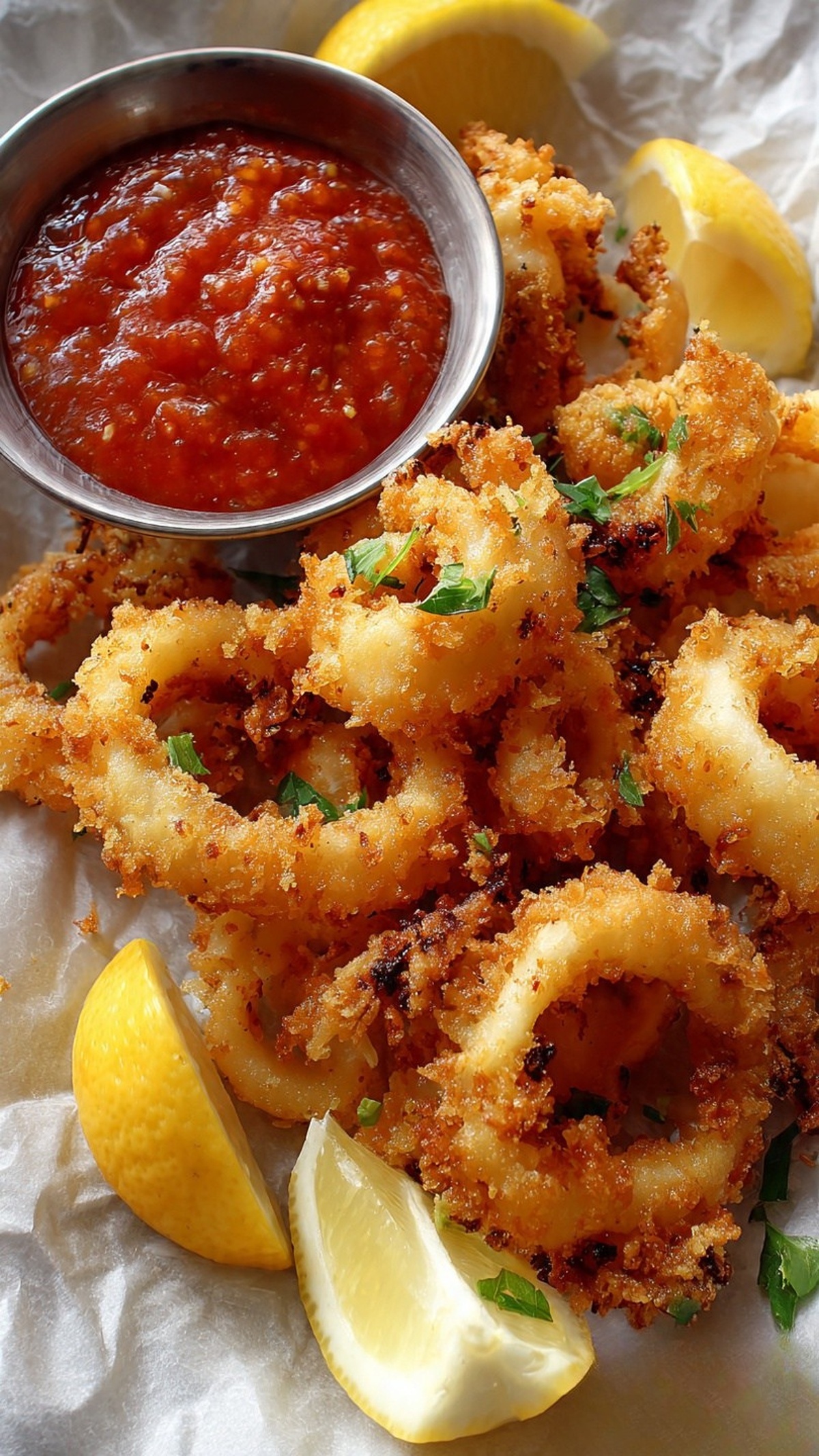
Fried Calamari
Equipment
- Medium bowl
- Large Bowl
- Colander
- wire rack and sheet pan
- paper towels
- small cooking pot or deep fryer
- Tongs
- candy/thermometer
Ingredients
- 1 pound frozen calamari tubes thawed
- Kosher salt to taste; about 1 teaspoon used in the milk soak
- 1/2 cup 2% milk
- 1 1/2 cup all-purpose flour
- 1/3 cup cornstarch
- 1/2 teaspoon baking powder
- 3/4 teaspoon dried oregano
- 1/2 teaspoon ground black pepper
- 1/2 teaspoon cayenne pepper
- grape seed oil for frying, about 4 inches in pot; use as needed
- 1 lemon cut into wedges to serve
Instructions
- Trim the thawed calamari tubes if needed and cut them into rings about 3/4-inch thick.
- In a medium bowl combine 1/2 cup milk with about 1 teaspoon kosher salt, stirring until dissolved.
- Add the calamari rings to the salted milk, cover, and refrigerate for 30 minutes to mellow flavor and help tenderize.
- While the calamari soaks, whisk together the flour, cornstarch, baking powder, dried oregano, black pepper, and cayenne in a large bowl until evenly blended.
- Set a large colander over a bowl. Working in batches, use tongs to lift a portion of rings from the milk, gently shake off excess, then toss them in the seasoned flour mixture so each piece is well coated; transfer coated rings to the colander and repeat with the remainder.
- Preheat your oven to 150°F (65°C). Line a sheet pan with a wire rack and top with paper towels to hold fried calamari and keep it warm.
- Pour enough grape seed oil into a small pot to reach about 4 inches up the sides and heat it to between 350°F and 365°F (175–185°C). If you don’t have a thermometer, test the oil by dropping in one ring—large bubbling and floating indicate it’s ready.
- Fry the coated calamari in small batches so the oil temperature remains steady. Gently add rings with tongs and cook until golden and crisp, about 2½–3 minutes per batch.
- Remove fried rings to the prepared wire rack lined with paper towels, immediately season lightly with kosher salt, and keep them warm in the low oven while you finish frying the rest.
- Transfer the finished calamari to a serving platter, finish with a squeeze of lemon, and serve right away.