
Share with your friends!
When the weather turns cooler and apples start piling up on the counter, I always reach a point where I’m tired of plain slices and basic crumbles. That’s when this German Apple Strudel steps in as the perfect solution. It looks impressive enough for guests, but it’s surprisingly manageable, even on a busy weeknight or Sunday afternoon with kids running around.
I picked up this method while traveling through Austria and Germany, where strudel is more of an everyday dessert than a special-occasion project. The dough stretches thin, the apple and raisin filling stays juicy, and the whole thing bakes into a crisp, flaky roll that holds well for reheating. If you’ve got a bag of apples, some raisins, and a bit of time to let the dough rest, you can pull off a classic bakery-style dessert at home without complicated equipment.
How to Prepare German Apple Strudel
Click here to get printable version
Things to Grab
- Strudel Dough
- 1 1/2 cups all-purpose flour (188 g)
- 1/4 teaspoon salt
- 1/3 cup lukewarm water
- 2 tablespoons vegetable oil
- 1/2 teaspoon apple cider vinegar (or lemon juice)
- Apple Raisin Filling
- 3/4 cup salted butter, melted
- 2/3 cup Panko breadcrumbs
- 2 lbs apples, peeled, cored, and thinly sliced (about 6 cups)
- 2/3 cup golden raisins, soaked in hot water for 10 minutes and drained
- 1/2 cup granulated sugar
- 1/2 teaspoon ground cinnamon
- Powdered sugar, for dusting
Steps to Savor
- In a stand mixer bowl, combine the flour and salt. With the paddle attachment on low speed, slowly pour in the lukewarm water, vegetable oil, and vinegar. Mix until a soft dough comes together and no dry flour remains. Switch to the dough hook and knead on medium speed until the dough is smooth and forms a soft ball.
- Transfer the dough to a clean work surface. Knead by hand for 2–3 minutes until the surface is smooth and elastic. Lift the dough and gently “slam” it onto the counter a few times to strengthen the gluten. Shape into a ball, place in a lightly oiled bowl, and turn it once so the top is lightly coated. Cover tightly with plastic wrap and let it rest at room temperature for 60–90 minutes so the gluten relaxes and becomes easy to stretch.
- Near the end of the resting time, heat the oven to 375°F (190°C). Soak the raisins in hot water if you haven’t already, then drain well. Peel, core, and thinly slice the apples. In a small bowl, mix the sugar and cinnamon. Cover a clean kitchen table or large counter with a smooth tablecloth or sheet; this will help you roll the strudel neatly.
- Move the rested dough to a dry surface and cut it cleanly in half with a bench scraper, pizza cutter, or large knife. Set one half aside under a lightly oiled piece of plastic wrap so it doesn’t dry out. Shape the other half into a ball and roll it out with a rolling pin as thin as you comfortably can.
- Carefully transfer the rolled dough to the tablecloth-covered surface. Start stretching it by placing your hands under the dough and using your knuckles, like stretching pizza dough, keeping jewelry off to avoid tears. Gently lift the thicker edges and pull from the center outward, letting a bit of air flow underneath. Rotate and stretch in sections. Stop pulling in any area that starts to look very thin and focus on the thicker spots instead.
- Continue stretching until the dough is very thin and roughly rectangular. You’ll know it’s ready when you can clearly see the pattern or color of the tablecloth through the dough. If there’s a thick band of dough around the edges, you can carefully tear off the excess or gently stretch those bands further so the whole sheet is as even and thin as possible.
- Using your hands (or a very soft pastry brush), spread about 1/4 cup of the melted butter evenly over the dough, leaving about a 1-inch border all around. Sprinkle half of the Panko breadcrumbs over half of the dough (this will be the side you’ll place the apples on). Arrange half of the sliced apples on top of the crumbs in an even layer, then top with half of the soaked raisins and half of the cinnamon-sugar mixture.
- Fold the short edge of the dough over the filling, then fold in the long sides to create a tight border that holds everything in. Using the tablecloth as a helper, lift the short, filled end of the cloth so the dough gently rolls over itself, forming a log. Keep lifting and guiding until the whole sheet is rolled, making sure the filling stays tucked inside and the log is fairly even from end to end.
- Lift or slide the strudel carefully onto a parchment-lined baking sheet with the seam side facing down. Repeat the stretching, filling, and rolling process with the remaining half of the dough and filling ingredients, reserving about 1/4 cup of melted butter. Place the second strudel on the same baking sheet if there’s room, leaving a bit of space between them. Brush both strudels generously with the remaining melted butter.
- Bake for 25–30 minutes, or until the strudel is a deep golden brown and crisp. The surface should look dry and flaky, not pale. Let the baked strudels cool on the pan for 10–15 minutes so the filling can set slightly, which makes slicing easier. Dust generously with powdered sugar just before serving and slice into thick pieces.
Getting the Dough Stretchy
The key to authentic German Apple Strudel is a dough that stretches almost see-through without tearing. The resting time is what makes this possible. Don’t shorten the 60–90 minute rest; this is when the gluten relaxes, turning a firm dough into something you can stretch with your hands. Keeping the dough slightly warm (room temperature, not chilled) also helps. If you feel resistance while stretching, pause and let the dough rest for 5–10 minutes right on the tablecloth, then continue. Always work from the thicker areas outward, and avoid poking with fingertips, which can cause holes. If tiny tears appear, don’t panic; they usually disappear once rolled, and you can patch them with a small scrap of dough if needed.
Best Apples for Strudel
For a classic German Apple Strudel, you want apples that keep their shape and balance sweet and tart flavors. Varieties like Granny Smith, Braeburn, Jonagold, or Honeycrisp work very well. A mix of two types is ideal: one more tart, one sweeter. Avoid very soft, mealy apples because they break down too much and can make the strudel soggy. Slice the apples thinly and consistently so they cook through in the relatively short baking time. If your apples are very sweet, you can reduce the sugar slightly; if they’re very tart, add a tablespoon or two more sugar to taste before assembling.
Using Breadcrumbs Correctly
The breadcrumbs in German Apple Strudel aren’t just filler; they act as a moisture buffer so the crust stays crisp. Light, dry Panko works especially well because it soaks up apple juices without turning heavy. Toasting them briefly in a bit of melted butter before sprinkling (optional but helpful) adds flavor and keeps them from getting pasty. Keep the crumbs mostly under the apples, not scattered thickly across the whole dough; you want them where the juices collect. Don’t skip them unless you’re ready to risk a soggier bottom. If your apples are very juicy, you can slightly increase the breadcrumb amount to help absorb the extra liquid.
Freezing and Reheating Tips
Strudel freezes surprisingly well, which makes this recipe practical for busy weeks or holiday prep. For the best texture, bake the strudel completely, let it cool, then wrap it tightly in plastic wrap and again in foil before freezing. To reheat, avoid the microwave if you want to keep the crust flaky. Instead, thaw in the fridge overnight (or on the counter for a couple of hours), then warm it in a 325°F (165°C) oven for 10–15 minutes until the crust is crisp and the center is heated through. You can also freeze unbaked, rolled strudel; in that case, bake from frozen, adding 10–15 extra minutes and tenting with foil if it browns too quickly.
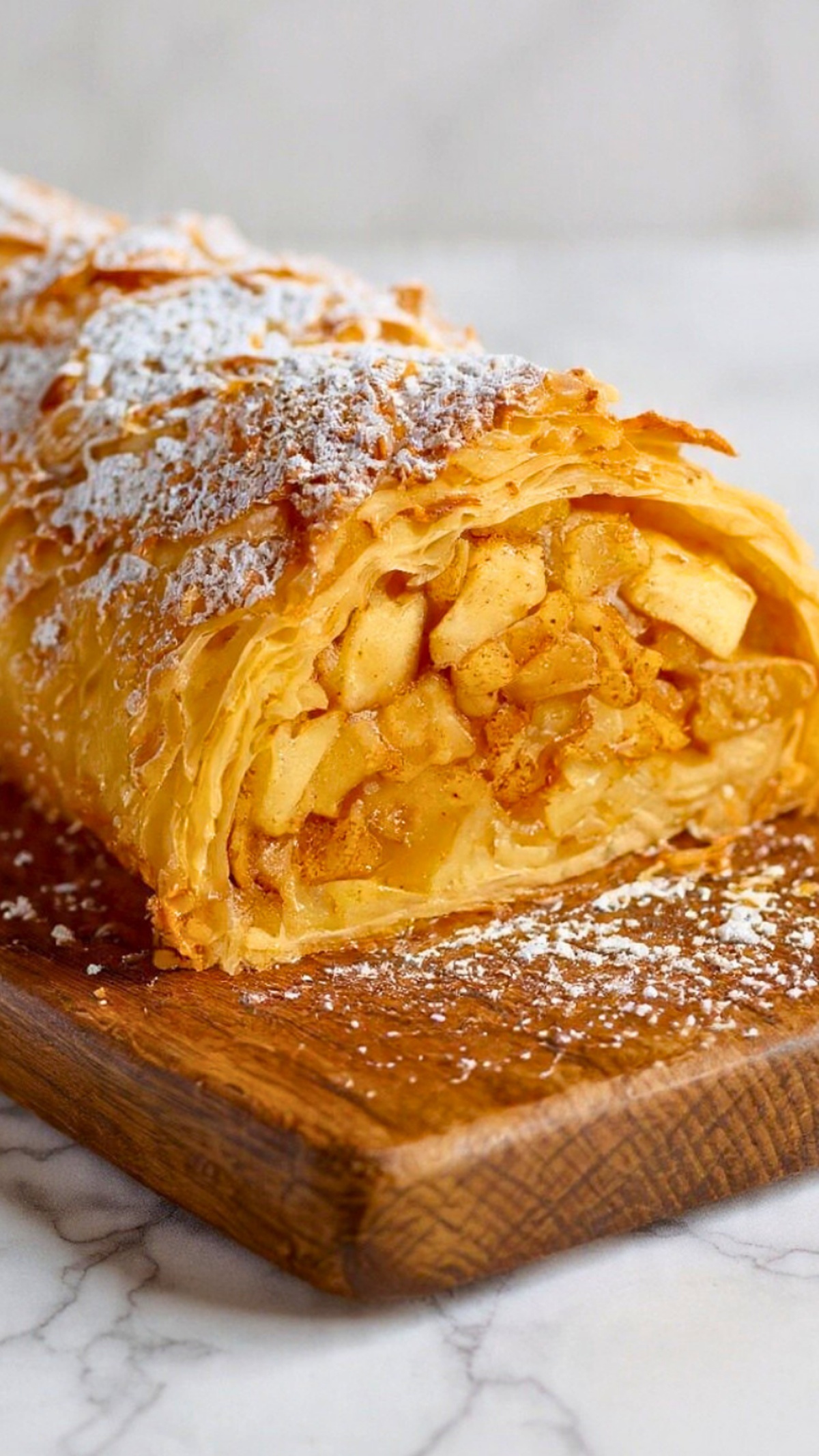
German Apple Strudel (Apfelstrudel)
Equipment
- stand mixer
- Dough hook
- Large Bowl
- Clean tablecloth or sheet
- Parchment-lined baking sheet
Ingredients
Strudel Dough:
- 1 1/2 cups all-purpose flour 188g
- 1/4 teaspoon salt
- 1/3 cup lukewarm water
- 2 tablespoons vegetable oil
- 1/2 teaspoon apple cider vinegar or lemon juice
Apple Raisin Filling:
- 3/4 cup salted butter melted
- 2/3 cup Panko breadcrumbs
- 2 lbs apples peeled, cored, and thinly sliced (about 6 cups)
- 2/3 cup golden raisins plumped in hot water for 10 minutes, then drained
- 1/2 cup granulated sugar
- 1/2 teaspoon ground cinnamon
- powdered sugar for dusting
Instructions
Make the Strudel Dough:
- In the bowl of a stand mixer combine the flour and salt. With the paddle on low, add the lukewarm water, oil, and vinegar until the mixture forms a soft mass. Swap to the dough hook and knead on medium until a smooth, supple ball forms.
- Turn the dough onto a clean surface and hand-knead 2–3 minutes until silky. To strengthen the gluten, gently slap the dough a few times on the counter, then shape into a ball. Place it in a lightly oiled bowl, rub a little oil over the top so it won’t dry, cover tightly with plastic wrap, and let rest 60–90 minutes.
Prepare Filling and Soak Raisins:
- Preheat the oven to 375°F (190°C). Place the raisins in a bowl of hot water and let them soften for about 10 minutes, then drain. Peel, core, and slice the apples thinly. Combine the granulated sugar and ground cinnamon in a small bowl. Lay a clean tablecloth or large sheet over your work surface to catch and support the dough while stretching.
Divide, Roll, and Stretch the Dough:
- Move the rested dough to a dry surface and cut it in half. Keep one half covered. Shape the other half into a smooth ball and roll it out as thinly as possible with a rolling pin.
- Carefully transfer the rolled dough onto the prepared tablecloth. Using your knuckles or the backs of your hands (remove jewelry first), gently lift and stretch the dough outward a little at a time. Work from the center toward the edges, letting the dough’s own weight help it thin; continue until the dough is nearly transparent and you can see the cloth pattern through it. Trim or gently pull away any thick outer bands.
Assemble the Strudel:
- With your hands or a very soft brush, spread about 1/4 cup of the melted butter evenly over the stretched dough, leaving a 1-inch border. Sprinkle half the breadcrumbs across half the dough, then layer half the apple slices on top. Scatter half the drained raisins over the apples and dust with half the cinnamon-sugar mixture.
- Fold the short edge of the dough over the filling, then fold in the sides to form an envelope that keeps the filling contained. Grasp the tablecloth at the short end and lift, guiding the dough so it rolls itself into a tight log; keep lifting and rolling until the strudel is completely rolled.
- Transfer the log to a parchment-lined baking sheet with the seam side down. Repeat the rolling and filling process with the remaining dough and filling, reserving about 1/4 cup of melted butter. Brush the tops of both strudels with the remaining melted butter.
Bake and Finish:
- Bake the strudels in the preheated oven for 25–30 minutes, or until the pastry is a deep golden brown. Remove from the oven and let them cool for 10–15 minutes so the filling sets.
- Dust the cooled strudels with powdered sugar, slice, and serve warm or at room temperature.